
Bussia Barolo DOCG Vintage 2021
Wine
Barolo has been defined more times the king of the wines; noble and generous known in Italy and to the foreign countries for his austerity, wealth of tastes and of aromas.
Produced south-west of Alba, in a region with rolling hills, which are steeper in some areas, Barolo is a wine with singular and precious characteristics that are determined by the complex geological profile of the area.
Today Barolo is one of the most esteemed Italian denominations in the world.
Bussia is a historic vineyard located in the village of Monforte d’Alba.
It is considered one of the most renowned Crus not only in Monforte but in the entire Barolo region. With its 190 hectares of vineyard surface, Bussia is the largest Cru in Monforte and the first Barolo Cru to be officially labeled, in 1961.
An important distinction must be made between Bussia Soprana—the area where our Barolo
comes from—located at the heart of the MGA, and Bussia Sottana, which lies at a lower altitude.
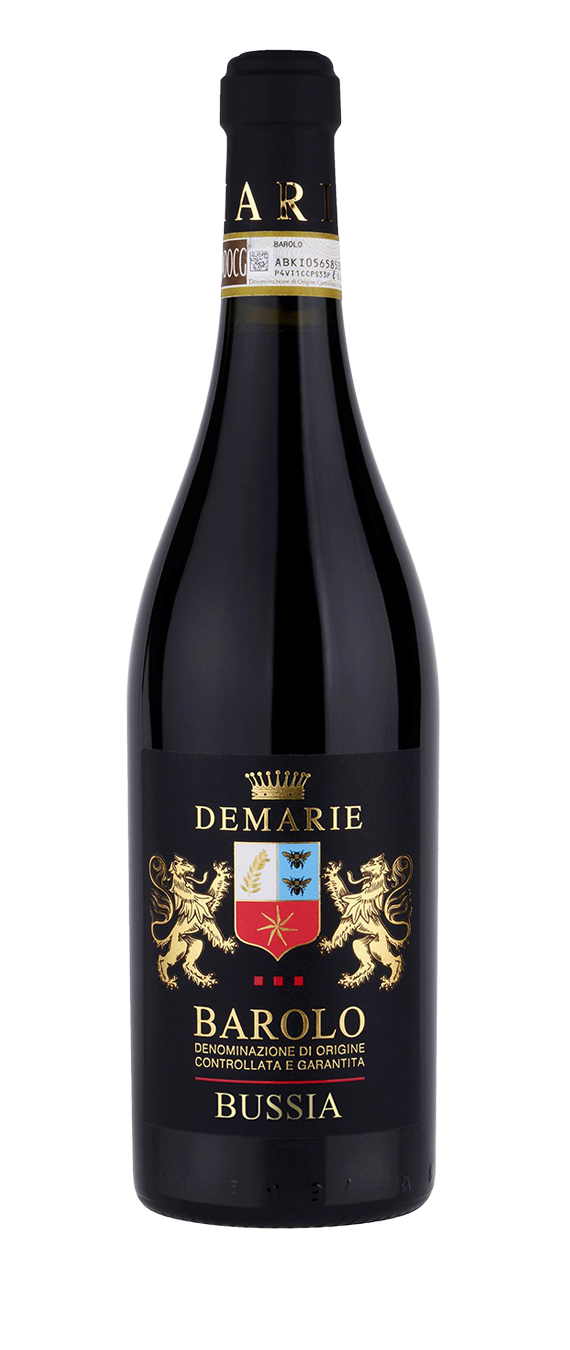
Tasting Notes
Variety: Nebbiolo grapes
MGA: Bussia
Colour: garnet red with orange reflections with ageing
Scent in perfume: intense, exceptionally complex, with notes of violets and vanilla
Flavour: dry, full-bodied and well balanced
Best served at: 18-20° C. – 65-68° F.
Food matches: first dishes, red meat, cheese, game
Vinification: traditional
Fining: long ageing in wood barrels and following bottle refinement
Size / Format: 0,75 l – 1,5 l – 3 l – 5 l
Ageing potential: up to 10-15 years after harvest
Past vintages
Vine
Nebbiolo is the oldest indigenous red-grape vine of Piedmont and one of the noblest and most prestigious in Italy.
Its name derives from ‘nebbia’, the Italian word for mist or fog: some say this is owing to the ‘misty’ look of its grapes, with their velvety covering, and others that it is because the late-ripening grape is often harvested during early autumn fogs.
Known also as ‘Queen of red grapes’ it is a finicky vine, requiring elaborate care and attention in order to thrive.
It is precisely for this reason that it has known both heydays and moments of utter abandon in the past, although local producers have remained faithful to it through thick and thin, continuing to make the great wines it is capable of producing.
Nebbiolo is a demanding vine, needing exactly the right soil type, a south-facing hillside, pruning and training.
A calcareous tufa-based soil is ideal for this vine that buds early – towards the middle of April – and ripens later than most other varieties, around the middle of October.
It suffers sudden changes in temperature but oscillations between day and night temperatures are an advantage during the grape ripening phase.
For a correct formation of tannins in the grape skins, south or south-west facing hillsides are required, where spring frosts rarely occur.
The Nebbiolo vine produces strong powerful wines, rich in alcohol, that express their characteristics after a period of ageing.
From the cultivation of Nebbiolo, Piedmont produces some of its greatest red wines, the pride of the Region.
Vineyard & Vintage Features
Barolo DOCG 2021
Chemical Analysis
Alcohol vol. (%): 15 %
Contains sulphites
Product in Italy


